

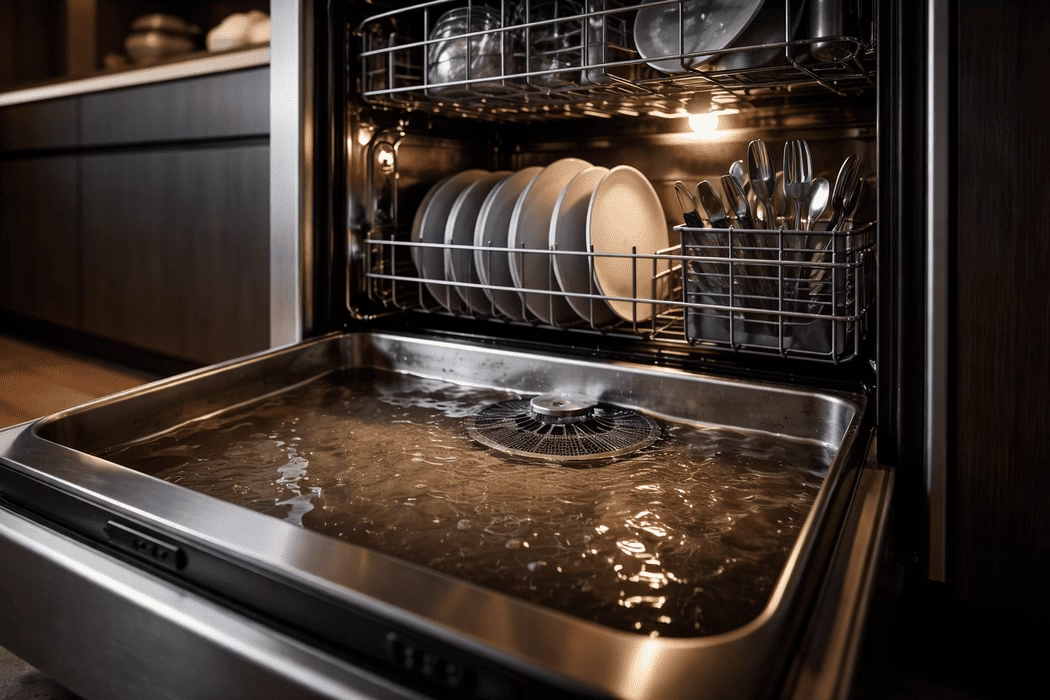
Tired of cleaning up puddles at the bottom of the container? Firstly, this is one of the most unpleasant problems users face. Plates are not adequately cleaned in this setting. And instead of cleaning, we get a source of bacteria. Not to mention the unpleasant odors. This post will explain how to remove standing water from dishwashers. So, let’s get started!
How Dishwasher Drainage Works
Apparently, the process is somewhat similar to washing, only with dishes. By the way, there are several operating modes. When the short cycle ends, the control module sends a signal to the drain pump. Then, the pump starts to rotate the impeller, creating pressure that pushes the water through the filter. The flow then moves through the hose and finally into the sewer or waste disposal system. It is important to remember that the check valve is the most important mechanism. It prevents dirty water from the sewer from flowing back into the machine chamber. In fact, even a minor breakdown in this chain can have serious consequences. We’re not just talking about puddles of sewage.
Most Common Reasons a Dishwasher Won’t Drain
Of course, it is difficult to determine the nature of the malfunction on your own. You may lack the necessary knowledge or skills. Still, a rough guess can be made about what happened. It is worth remembering what kinds of malfunctions can occur in the unit.
Clogged Filter or Drain Hose
This happens if the drain hose is clogged or blocked. This is facilitated by fat deposits and small food waste. In particular, fruit pits, labels, or glass fragments. The filter at the bottom of the machine is designed to catch food debris. But this does not mean that you can thoughtlessly throw whatever you want into it.
Faulty Drain Pump
The drain pump may fail due to mechanical blockage or electrical malfunction. In the first case, a new tool gets into the impeller’s cavity, blocking its movement. Another option is when the pump motor winding burns out.
Garbage Disposal Connection Issues
Garbage storage is the solution to the above problem. It allows the dishwasher to operate without interruption. However, if this tiny mechanism fails, everything stops. So, inside the grinder pipe, where the machine hose is connected, there is a plastic plug that is often forgotten to be removed during installation. In addition, clogging of the grinder itself blocks the water outlet, which is extremely unpleasant.
Control or Sensor Malfunctions
Sometimes the mechanical parts are fine, but the software fails. A faulty water level sensor may falsely report to the system that the water has already been drained. Also, the control board may not supply power to the pump due to a burnt-out relay. These are typical problems that arise from improper handling.
What You Can Check Safely Before Calling a Technician
In general, there is no need to rush to the service center right away. To make sure that the issue is serious, you need to take a few simple steps. These are as follows:
Check the filter. Remove and thoroughly rinse the filter mesh under hot water with detergent.
Check the drain hose. Make sure it is not twisted or damaged.
Check the drain under the sink. The siphon or grinder should not be clogged. We suggested turning on the water in the sink. If it flows slowly, the problem is with the building’s sewage system.
Restart. Simply press the “Cancel” or “Start” button for 3 seconds to force the machine to run a short cycle again.
When a Drainage Issue Requires Professional Repair
However, there are cases when you cannot do something on your own. Professional help is needed. There are a number of signs that indicate this. In particular, these include:
The pump is noisy. A hum or squeak indicates bearing wear.
Pump malfunction. This most often occurs when debris is located deep or in hard-to-reach places;
Errors on the display. These may be error codes indicating a malfunction of the sensors or control module;
Leaks. In this case, water appears not only in the chamber but also near the machine.
Why Proper Diagnosis Prevents Repeat Failures
It should be noted that reliable diagnostics are not a luxury. Instead, without expert checks, you’ll end up wasting lots of funds. You may have to replace parts that are still in good working order. It depends on the specific circumstances. For instance, the signs of a clogged hose and a clogged pump are very similar. In fact, the workshop has the necessary tools to identify problems and fix them.
Are you upset by a breakdown? Actually, dishwasher repair in Chicago is what you need. Our team is ready to come to your aid at any time. There are no problems that we can’t solve. Contact the professionals right now!
