

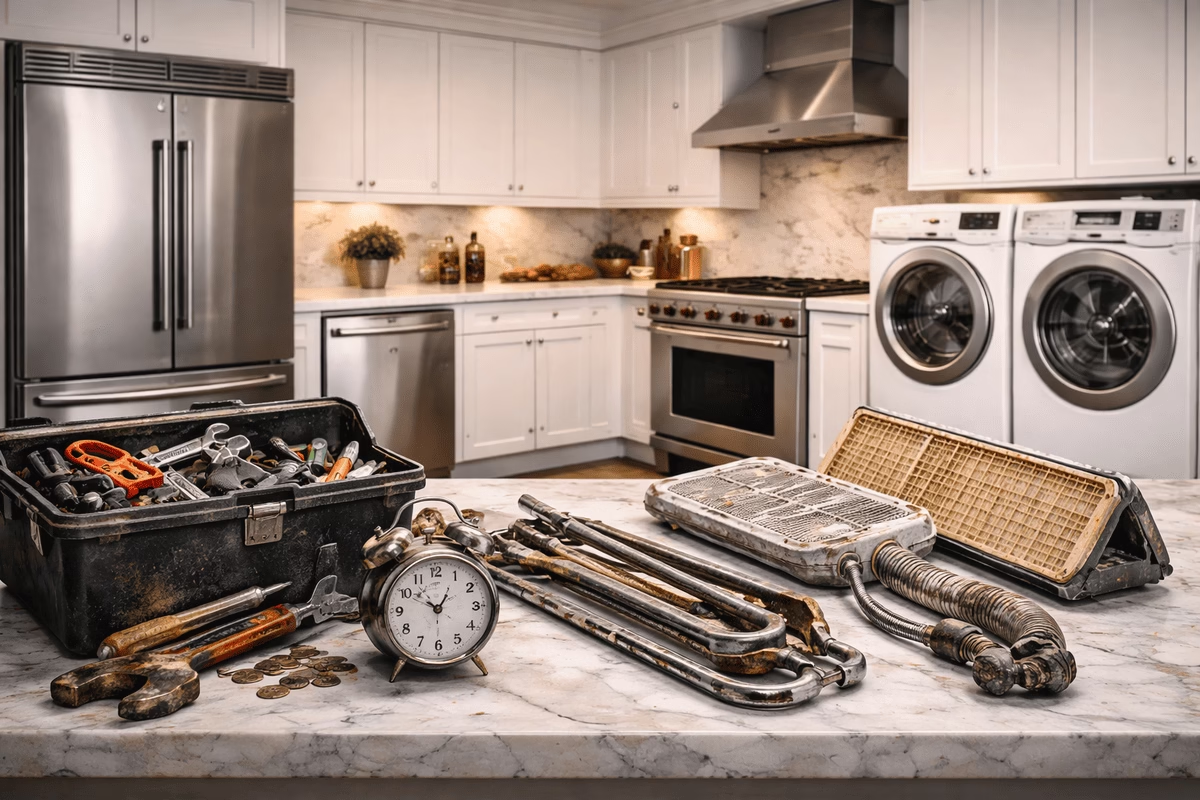
Want to buy new household appliances? This is the right way to make your home more comfortable. However, nothing lasts forever. In fact, every owner sooner or later faces breakdowns. So, how long should appliances last? There are many aspects to discuss here. Technology is becoming more complex, and understanding service life helps you plan your budget better. We have prepared some tips to help you avoid unexpected breakdowns. Let’s get started!
Average Lifespan of Common Home Appliances
Of course, every brand promises durability and reliability for its products. By the way, there are even average statistics for different categories of appliances. As a rule, appliance life expectancy depends on the intensity of use and the quality of assembly. Let’s take a closer look at this.
Refrigerators
Honestly, refrigerators are leaders in terms of service life. The average appliance lifespan for a modern refrigerator is 10 to 14 years. Actually, premium models last a little longer. That’s about 20 years or more. It is important to thoroughly clean the condenser coils of dust.
Dishwashers
Dishwashers work with pretty harsh chemicals. So, this affects how they hold up. How long do home appliances last? Usually, it’s no more than 8–10 years. Hot water and detergents play a big role in this. Over time, they damage the seals and pumps.
Washers and Dryers
Washing machines and dryers cannot serve for more than 10–12 years. Meanwhile, if a washing machine has a front-loading drum, the bearings suffer the most. Lucky for us, dryers tend to last longer if their owners follow the directions and clean the lint filters.
Ovens and Cooktops
Gas and electric stoves are the most durable of all. Their appliance lifespan often exceeds 15–18 years. Obviously, electric ovens may need to have their heating elements replaced every 5 years. However, the main body and electronics remain functional for many years to come.
What Shortens Appliance Lifespan
Even if you follow the operating instructions, breakdowns can still happen. There are a number of reasons for this. It is not necessarily the owner’s fault. The following are some of the things that lead to equipment damage occurring too soon:
Power surges. Sensitive electronics are very sensitive to network stability.
Water hardness. Limescale destroys heaters in washing machines and dishwashers.
Overloading. Trying to wash everything at once or stuffing the refrigerator to capacity leads to compressor overheating.
Remember that one carelessness can ruin all your plans. Spilled coffee or violation of the rules of use can turn into a disaster.
How Maintenance Extends Appliance Life
Apparently, regular diagnostics is a logical way to postpone the purchase of new equipment. Basic appliance maintenance tips include:
Cleaning air conditioner filters every month;
Checking the integrity of rubber seals;
Have professional descaling done once every six months.
Note that these simple steps can add 3-5 years to the standard service life. Of course, the brand and budget segment of the model also play a role. However, this is the main thing you need to know in any case. Keep it in mind!
Signs an Appliance Is Near the End of Its Life
In general, there are certain signs that indicate when appliances need to be replaced. Among them, it is impossible not to mention unusual noise or strong vibrations. You may also notice an increase in your electricity bills. Of course, this means that the appliance is consuming more electricity for unknown reasons. Plus, there may be frequent minor breakdowns, one after another. At least, after a while, it will be impossible to find spare parts due to the advanced age of the model.
When Repair Makes Sense and When Replacement Is Better
In truth, you need to follow the rule: if the cost of repair exceeds 50% of the cost of a new, similar item, replacement is a priority. Actually, it is worth considering that new appliances consume 30% less energy. This means that repairing a model that was released 10 years ago is not such a reasonable decision. After all, investing in new equipment pays for itself in a few years just through savings on utility bills.
